
Abstract Line Art Prints: Capture Emotion with Simplicity
Key Takeaways
- Abstract line art prints use minimal, expressive linework to capture form, emotion, and beauty, making them one of the most versatile wall art styles available today;
- Rooted in the artistic legacies of Picasso and Matisse, this style has evolved into a modern interior design staple celebrated for its elegant simplicity;
- Popular styles range from continuous one-line figure drawings and minimalist face art to botanical outlines and geometric abstract compositions;
- Abstract line art prints work beautifully as solo statement pieces or as part of a gallery wall, and with Mixtiles, you can hang and rearrange them freely with no nails or wall damage required.
If you have been scrolling through interior design feeds lately, chances are you have come across abstract line art prints. These striking, minimal pieces seem to be everywhere, and for good reason. With just a few expressive strokes, they manage to convey emotion, elegance, and personality all at once. But what exactly are they, and why have they taken the home decor world by storm? This guide breaks it all down, from their artistic roots to how to style them in your own space.
Ready to bring abstract line art prints to your walls? Explore our collection of wall arts and start building your perfect gallery walls today. No nails, no stress.
What Exactly Are Abstract Line Art Prints?
Abstract line art prints are wall art pieces created using minimal linework to suggest form, emotion, or beauty. They strip away color, shading, and photographic detail, leaving only the essential lines that define a subject. The result is artwork that feels both effortless and intentional.
The basics: line art defined
Line art is a drawing style that relies entirely on lines to create an image. No color gradients, no realistic texture, no photographic depth. The lines do all the work, tracing the outline or contour of a subject with remarkable economy. A single curved stroke can suggest a human shoulder; a few looping lines can conjure a flower in full bloom. This simplicity is exactly what makes line drawings so compelling as wall decor. If you want to explore the full scope of this technique and its many forms, our dedicated guide to line art covers everything you need to know.
What makes it "abstract"?
The abstract element comes in when those lines depart from strict realism. Rather than reproducing a subject accurately, abstract line art uses lines to express mood, movement, or feeling. A face might be suggested by a few sweeping curves. A figure might be reduced to its most graceful contour. To understand what truly separates this approach from more conventional styles, it helps to explore what abstract art really means and how it differs from representational work. The goal is not to replicate reality but to distill it, giving abstract line art prints a poetic quality that purely representational art rarely achieves.
How do abstract line art prints differ from other wall art styles?
Compared to traditional paintings, photography, or illustrative posters, abstract line art prints are defined by their restraint. Where a landscape painting fills every inch of canvas with color and texture, a line art print uses generous negative space, letting the blank background breathe. This makes them exceptionally versatile. A black line drawing on white or cream paper fits into almost any interior, from a sleek modern apartment to a warm, boho living room.
Where Does Abstract Line Art Come From?
Abstract line art has deep roots in the history of modern art, with two figures standing above all others: Pablo Picasso and Henri Matisse. Their experiments with minimal, expressive linework laid the foundations for the style that decorates living rooms and bedrooms across the world today.
Pablo Picasso: the father of modern line drawing
Picasso's contribution to line art is hard to overstate. His series of single-line animal and figure sketches, created with one continuous stroke, demonstrated that a drawing could be both radically simple and profoundly expressive. His minimal drawings of dogs, bulls, and doves became iconic examples of economy in art, showing that a great line art print needs very little to say a great deal.
Henri Matisse and the art of elegant simplicity
Matisse brought a different energy to the tradition. Works such as La Pompadour (1951) and Nadia au Menton Pointu (1948) show how contour lines can capture personality and intimacy with extraordinary efficiency. Matisse described drawing as "taking a line for a walk," a phrase that perfectly captures the spirit of abstract line art and its enduring appeal.
From fine art galleries to your living room walls
What began in elite galleries gradually filtered into mainstream design culture. As Scandinavian and minimalist interior design gained global popularity, the clean aesthetic of line art found a natural home in contemporary spaces. Today, abstract line art prints are a staple of home decor, appreciated for their ability to add sophistication without visual clutter.
What Are the Most Popular Styles of Abstract Line Art Prints?
Abstract line art is not a single style but a family of related approaches, each with its own mood, palette, and ideal setting. The table below gives a quick overview of the four main categories you will encounter when shopping for line art prints.
|
Style |
Key Technique |
Typical Palette |
Best Room |
|---|---|---|---|
|
Continuous one-line drawing |
Single unbroken stroke forms the entire image |
Black on white or cream |
Bedroom, reading nook |
|
Minimalist face and figure art |
Body or face reduced to its essential contours |
Black and white, blush pink, sage green |
Bedroom, living room |
|
Botanical and nature-inspired |
Leaf, flower, and plant outlines |
Earthy tones, beige, warm black |
Kitchen, dining room |
|
Geometric and abstract shapes |
Arcs, circles, triangles, and pattern compositions |
Black, white, monochrome |
Home office, hallway |
Continuous one-line drawings
The continuous or single-line drawing is perhaps the most recognized form of abstract line art today. The artist creates an entire image without lifting the pen, resulting in a fluid, interconnected composition. Figures, animals, and faces rendered this way have an organic, almost gestural quality. They work beautifully in black on white paper and suit any space where you want quiet artistry without visual noise.
Minimalist face and figure art
Face and body contour prints are among the most searched styles in the line art category. These pieces reduce the human form to its most elegant lines, celebrating the curves of a silhouette or the geometry of a face. They tend to come in classic black and white, though single accent colors like blush pink or sage green are also popular choices for a softer, more contemporary feel.
Botanical and nature-inspired line art
Botanical line art captures leaves, floral shapes, and plant forms in clean, minimal outlines. The style sits at the intersection of scientific illustration and modern minimalism. Earthy tones, soft beige backgrounds, and delicate black lines give this category a warm, natural energy that pairs beautifully with wood furniture and neutral interiors.
Geometric and abstract shapes
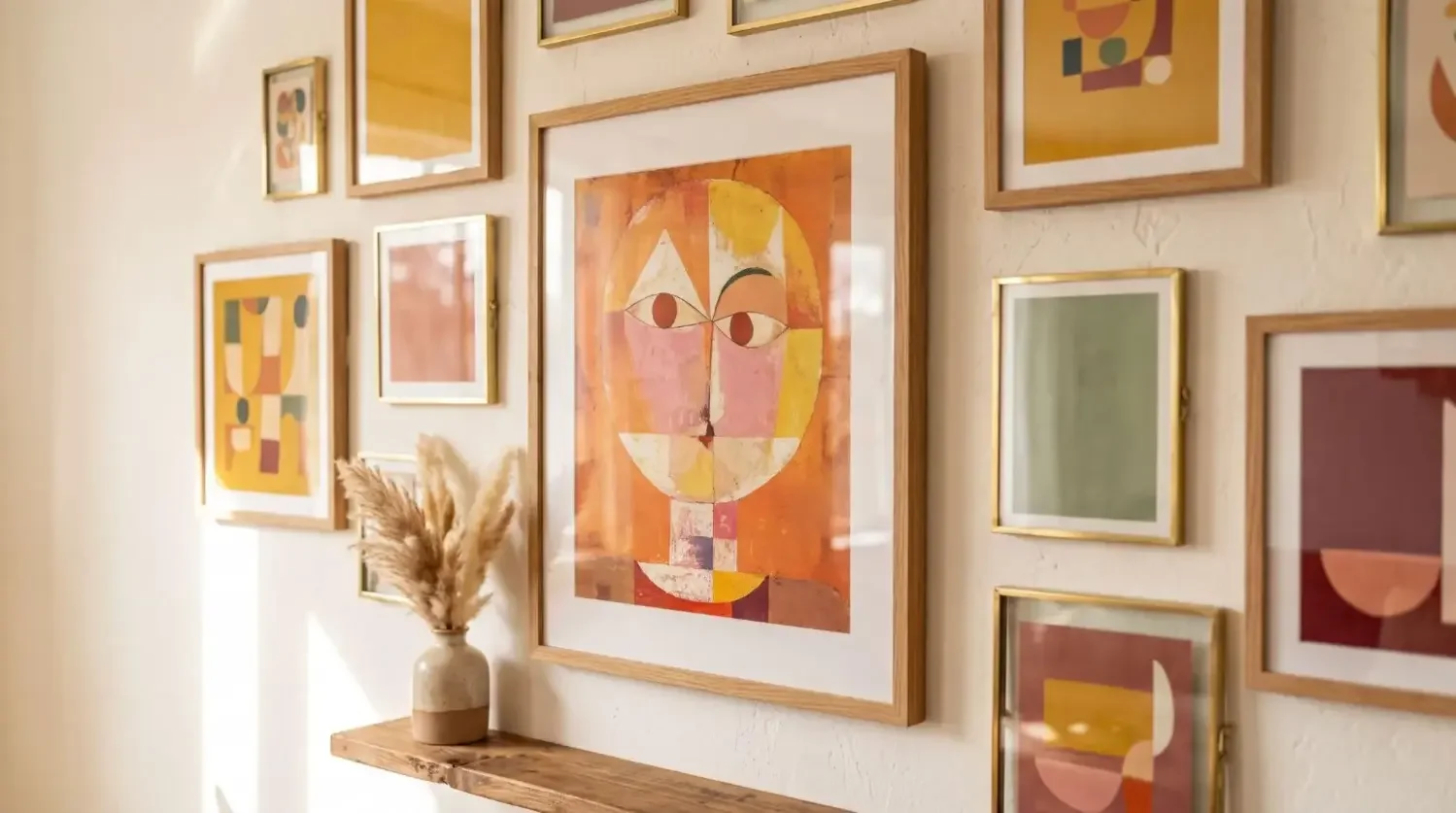
For a more graphic, contemporary look, geometric line art uses circles, triangles, arcs, and abstract shapes to create compositions that feel architectural and precise. Mid-century modern inspired designs, topographic contour lines, and Bauhaus-influenced patterns all fall into this category, adding visual interest without narrative complexity.
Love the minimalist look? Mixtiles lets you print and display your favorite abstract line art, or your own photos transformed into wall decor, with beautifully simple and reusable photo tiles.
Why Are Abstract Line Art Prints So Popular Right Now?
Several converging factors explain the extraordinary rise of abstract line art prints in contemporary home decor. The global influence of Scandinavian and minimalist design has created an appetite for beautiful wall arts that are visually quiet but emotionally resonant. Abstract line art delivers exactly that: pieces that command attention without overwhelming a room.
Social media has also played a significant role. Pinterest boards and Instagram feeds have made gallery walls a mainstream aspiration, and line art prints are natural gallery wall material. Their neutral palettes and clean forms mix easily with personal photographs, typography prints, and other art styles, making them endlessly combinable.
Finally, there is the accessibility factor. Abstract line art prints are available across a wide range of formats and price points. They suit small studio apartments as naturally as they suit spacious family homes, and they require no specialist knowledge to appreciate. Whether you are a first-time art buyer or a seasoned decorator, a simple black and white line drawing has an immediate, universal appeal.
How Do You Display Abstract Line Art Prints in Your Home?
The way you display abstract line art prints matters as much as the prints themselves. Fortunately, the style is forgiving and adaptable, working as a solo statement or as part of a layered gallery wall arrangement.
Making a statement: displaying a single oversized piece
A large abstract line art print can anchor an entire room on its own. A single-line figure drawing in a 20 x 27 inch or larger format above a bed or sofa creates a refined focal point that needs nothing around it to feel complete. Keep the frame minimal: black, white, or light wood directs all attention to the drawing itself. Mixtiles custom canvas prints make it easy to go large without the cost or complexity of traditional custom framing.
Building a gallery wall with abstract line art
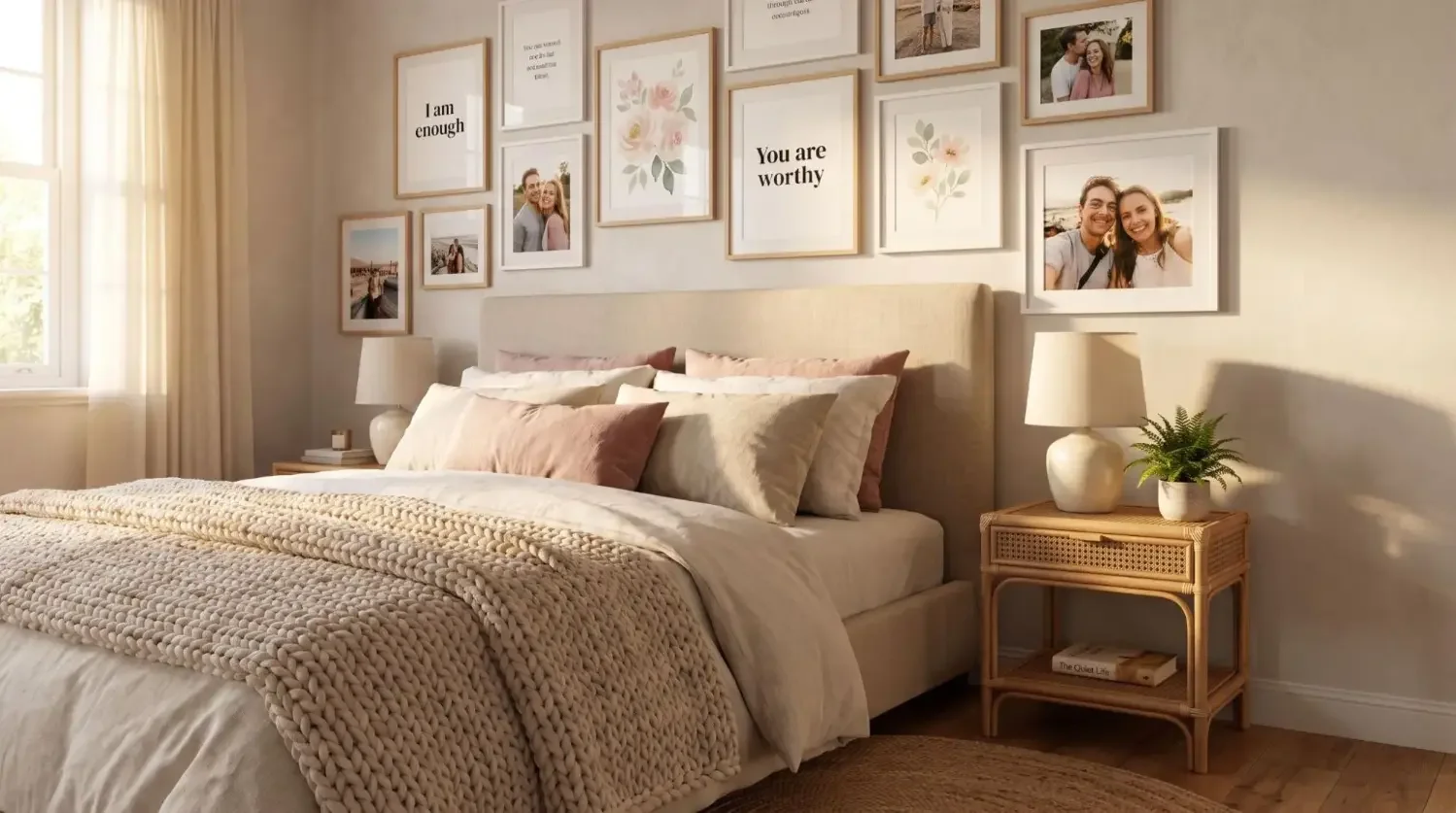
Abstract line art prints are ideal for creating a stunning picture wall because their restrained palettes make them easy to combine with other pieces. Mix different line art styles within the same color family: a botanical print beside a face contour drawing beside a geometric abstract composition. Add a few personal photo tiles from Mixtiles to make the arrangement feel uniquely yours. The Mixtiles adhesive system lets you experiment freely, moving tiles around until the layout feels exactly right without leaving a single mark on the wall.
Which rooms work best for abstract line art prints?
Almost every room in the home benefits from abstract line art. Here is a practical guide to help you match style to space:

Bedroom: romantic face and figure line art or soft botanical prints in neutral tones for a calm, elegant atmosphere.

Living room: a large single-line drawing as a focal point, or a mixed gallery wall combining line art tiles with personal photographs.

Kitchen and dining room: floral and leaf line art prints in warm earthy tones to bring a gentle natural energy to the space.

Home office: geometric and abstract line compositions in black and white for a clean, focused environment.
How Do You Choose the Right Abstract Line Art Print for Your Space?
Choosing the right abstract line art print comes down to three things: color, scale, and mood. Start with your room's existing palette. If your walls and furniture are neutral, almost any line art print will work. If your space already has strong accent colors, a classic black and white piece is the safest and most striking choice.
Scale matters more than most people expect. A small print on a large wall gets lost; a large print in a tight space can feel oppressive. As a general rule, aim for a piece that fills roughly two thirds of the wall space above the furniture it accompanies. Our wall art size guide walks you through exactly how to calculate the right dimensions for any room, so you can shop with confidence. Mixtiles offers a range of sizes from 8 x 8 inches up to 27 x 36 inches, making it easy to find the right fit for any wall.
Finally, think about mood. Romantic couple line art suits a bedroom. Clean geometric shapes energize a home office. Botanical and floral line drawings bring warmth to a kitchen or dining room. Start with one print you love, and build from there. The Mixtiles repositionable adhesive system means you can add, remove, and rearrange pieces as your taste evolves, with no commitment and no damage to your walls.
Abstract line art prints are more than a passing trend. They are a timeless expression of beauty through simplicity, rooted in artistic history and perfectly suited to modern interiors. Whether you are drawn to the fluid elegance of a continuous one-line drawing, the organic warmth of botanical outlines, or the graphic precision of geometric abstract shapes, there is a style that will speak to your space and your personality.
The best part is that you do not need a gallery-sized budget or a set of tools to get the look. With Mixtiles, you can bring abstract line art prints and your favorite personal photos to life on your walls, arrange them into a gallery wall you love, and move them around as often as you like. Great wall decor should be effortless, and with Mixtiles, it truly is.
Transform your space with abstract line art prints. You can have them printed on premium canvas prints or even choose large 20x20 canvas prints that stick beautifully and peel off without a trace.
Frequently Asked Questions
What size abstract line art print should I choose for my wall?
The ideal size depends on your wall space and nearby furniture. As a general rule, a print should fill roughly two thirds of the width of the furniture beneath it. Larger prints work best as solo focal points, while smaller ones suit gallery wall arrangements.
Are abstract line art prints only available in black and white?
Not at all. While black on white remains the most popular choice for its versatility, abstract line art prints also come in a wide range of palettes, including blush pink, sage green, warm beige, and gold. Colored versions work especially well in rooms with soft, neutral tones.
How should I frame abstract line art prints?
A simple frame in black, white, or natural wood works best for most line art prints, keeping the focus on the artwork itself. Thin, minimal frames suit modern and Scandinavian interiors, while slightly wider frames complement more traditional or eclectic spaces.
Can abstract line art prints work in a room that already has color?
Yes. Classic black and white line art prints are particularly well suited to colorful rooms because their neutral tones balance bolder hues rather than competing with them. Alternatively, choose a print that incorporates one of the room's accent colors for a cohesive, intentional look.

Be the first to know — deals, news & decor ideas.
By clicking you agree to the Terms of Use & Privacy Policy